
What Does Irrigation Installation Cost in Portland, OR?
Irrigation installation Portland OR homeowners typically budget runs $2,500 to $8,000 for a fully installed residential system — a basic drip setup for a small yard sits at the lower end, while a multi-zone in-ground sprinkler system with a smart controller covers the upper range. HD Landscape and Maintenance designs and installs irrigation systems across Portland, Beaverton, Hillsboro, and the greater Portland metro, licensed by Oregon's Landscape Contractors Board (LCB Lic. #9977). Call (971) 336-5520 for a free site assessment.
By Donavan Hesedahl, Owner · Last updated 3rd July 2026
Do You Need Irrigation in Rainy Portland, OR?
Portland's reputation for rain is real — the metro averages about 37 inches per year. But that's the part most homeowners don't realize: nearly all of it falls between October and late May. From roughly mid-June through September, Portland typically goes 60 to 90 consecutive days with little or no measurable rainfall. For a lawn, that's the entire active growing season without a drop.
So do I need irrigation in Portland, OR? For a lawn, almost certainly yes. For a vegetable garden, fruit trees, or new plantings: absolutely. The perennial plants and established trees that fill Portland's west hills neighborhoods and flat east-side yards are adapted enough to survive a dry Oregon summer, but they don't look great without some support — and grass without irrigation in July goes dormant and brown within two weeks of the last rain.
Portland's dry summer isn't a quirk — it's a pattern driven by the Pacific High pressure system that dominates the region from June through September. That seasonal structure is what makes irrigation genuinely necessary here despite the city's rainy-day identity. Our sustainable landscaping page covers how we design irrigation to complement Portland's native plant approach rather than working against it.
What Is the Best Irrigation System for Portland Yards?
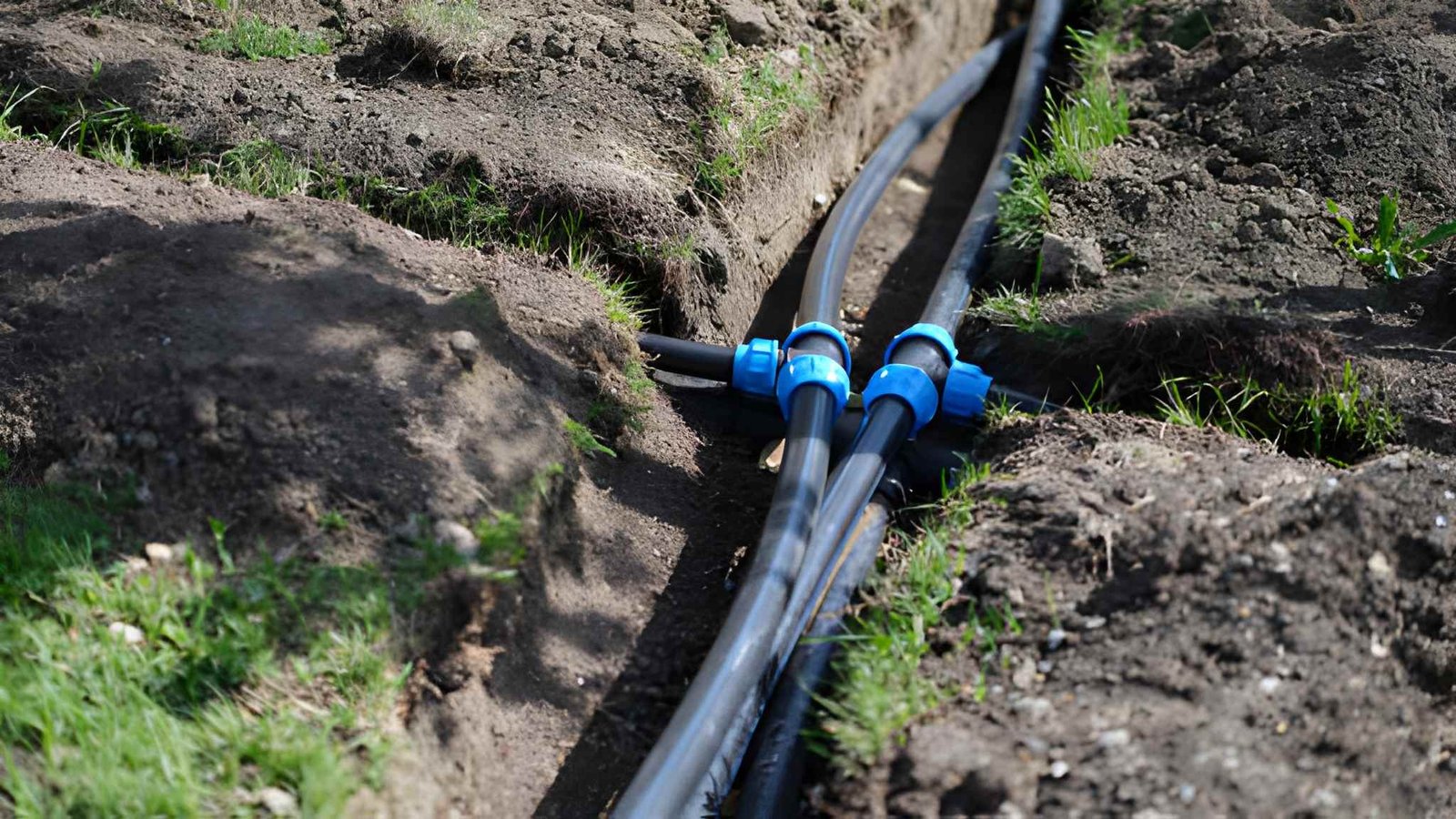
What is the best irrigation system for the Pacific Northwest depends largely on your yard's terrain, plant types, and your goals around water efficiency. Portland properties generally break into three irrigation scenarios:
In-ground sprinkler systems suit most residential lawns in Portland's NE, SE, and North neighborhoods where terrain is relatively flat. Pop-up rotary heads and spray heads deliver consistent coverage across turf and mixed planting beds when the zones are designed correctly. Sprinkler system installation Portland OR homeowners choose for established lawns typically involves four to eight zones depending on property size, each independently controlled and timed.
Drip irrigation excels for Portland's SW Hills and Beaverton-area properties where slopes make sprinkler distribution uneven. Drip also works better in the dense planting beds and rain gardens that define much of the Portland landscape aesthetic — targeted emitters deliver water directly to root zones without runoff, which matters on slopes and for water-sensitive plants. As drip irrigation contractors Multnomah County homeowners can verify, we size emitters and zone lengths based on plant water requirements rather than applying a uniform rate. The EPA WaterSense program identifies drip as one of the most efficient methods for outdoor irrigation — estimates put water savings at 30–50% over conventional spray systems.
Smart irrigation Portland metro systems add a rain sensor and ET-based (evapotranspiration) controller that adjusts the watering schedule based on actual weather data. In Portland's shoulder seasons — particularly May and early June, when warm sunny stretches alternate with multi-day rain events — a smart controller is the most practical upgrade available. It pauses scheduled irrigation when the rain sensor detects precipitation and resumes based on soil moisture and temperature data. This prevents the overwatering pattern we see most often on manually programmed systems in the Portland metro: the sprinklers running at 6 AM the morning after a night of rain.
For homeowners deciding between systems, which irrigation system is best for Portland yards is usually determined during our site visit — slope, soil type, existing plant selection, and access to water pressure all shape the recommendation.
How Much Does Sprinkler System Installation Cost in the Portland Metro?
How much does a sprinkler system cost in the Portland area in 2026? Here are the installed ranges we see across the metro:
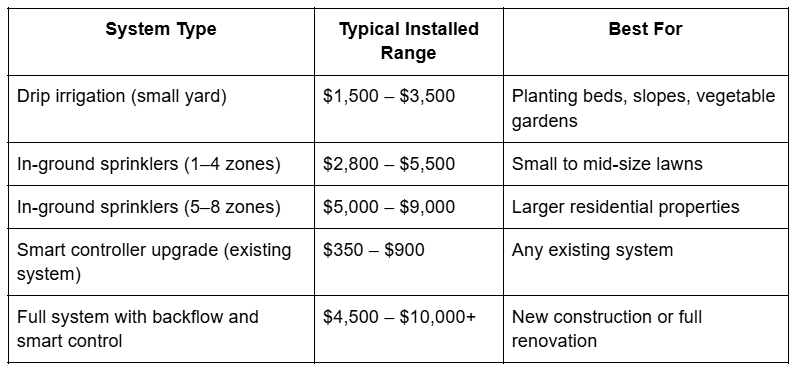
Portland's pricing runs slightly above regional averages due to labor market conditions and the permit and backflow compliance steps required by the Portland Water Bureau on new installations. If you're comparing bids, make sure every quote includes the backflow preventer — it's legally required and contractors who omit it from the estimate are under-quoting to win work.
As the best irrigation installers near Portland OR, we include a full site walk, zone design, permit coordination, and post-installation walkthrough in every project. No hidden add-ons after the contract is signed. For repairs on existing systems, see our Portland sprinkler repair page.
Do You Need a Backflow Preventer in Portland, OR?
Yes, and this is not optional. State law and Portland City Code require backflow prevention assemblies on all properties with irrigation systems. The Portland Water Bureau enforces this requirement because an irrigation system creates a potential cross-connection — a point where garden water (which contacts soil, fertilizers, and pesticides) could reverse into the drinking water supply under certain pressure conditions.
Portland Water Bureau's backflow requirements specify that property owners must notify the Water Bureau before installing any assembly, and that the assembly must be inspected and the installation fee paid before service is finalized. For residential irrigation, the assemblies most commonly used are the double check valve assembly (DCVA), which can be installed below grade near the water meter, or the pressure vacuum breaker assembly (PVBA), installed above grade. Once installed, the assembly must be tested annually by a state-certified tester — Water Bureau sends reminder letters each spring.
Oregon LCB-licensed landscapers can install and maintain backflow assemblies on irrigation systems — a distinction that matters when evaluating contractors. An unlicensed installer cannot legally handle backflow work in Oregon. HD Landscape and Maintenance holds Oregon LCB Lic. #9977 and coordinates all Water Bureau notification and inspection scheduling as part of every irrigation installation. A properly permitted, inspected, and annually-tested backflow preventer protects both your water quality and your compliance status with the city.
If your property is in Beaverton or Hillsboro (served by Tualatin Valley Water District rather than Portland Water Bureau), backflow requirements apply but are administered through TVWD rather than the Portland Water Bureau — we handle that coordination as well.
When to Water and When to Winterize in Portland
When should I water my lawn in Portland, Oregon? The reliable irrigation window runs from the second or third week of June through the end of September. Before mid-June, Portland's soil holds enough moisture from spring rains that irrigation is often unnecessary and can actually waterlog heavy clay soils common in much of the metro. After October 1, fall rains typically resume and manual irrigation should be suspended.
During peak dry season (mid-July through August), a cool-season lawn like the perennial ryegrass that dominates Portland properties needs about one inch of water per week. In practice, that means two or three watering cycles of approximately 20–30 minutes per zone, depending on head type and pressure. Smart controllers handle this math automatically.
Winterization timing in Portland matters more than homeowners expect. While Portland rarely sees hard freezes, the Gorge wind events that push cold continental air from the Columbia River Gorge can drop temperatures below 25°F in North Portland, NE, and east Multnomah County neighborhoods with little warning. We recommend winterizing — draining the system and blowing out lines with compressed air — by mid-October, before the first significant Gorge wind event of the season. Lines left with standing water through a Gorge freeze can crack PVC lateral lines and split backflow assemblies, turning a $150 winterization into a $1,500 spring repair. Our Portland drainage solutions page covers related outdoor water management topics if you're also dealing with winter drainage concerns.
Our Portland Metro Service Area
As top rated sprinkler companies in the Portland metro, HD Landscape and Maintenance installs and services irrigation systems across Portland, Beaverton, Hillsboro, Lake Oswego, Tigard, Tualatin, Wilsonville, Gresham, and surrounding communities in Multnomah, Washington, and Clackamas Counties. Visit our Portland landscaping location page for the full service area.
Frequently Asked Questions
Is irrigation necessary in rainy Portland?
Yes — despite Portland's reputation for rain, the metro receives almost no precipitation between mid-June and early October. That 60–90 day summer dry season spans the entire active growing season for lawns and gardens. Without irrigation, cool-season grasses go dormant and brown within two weeks of the last spring rain, and new plantings face real establishment stress. Irrigation is genuinely necessary for maintained Portland lawns and almost any active garden during the dry season.
When should I water my lawn in Portland, Oregon?
Begin watering when the spring rains become unreliable — typically the second or third week of June. Water once to twice per week to deliver approximately one inch per week to established cool-season lawns. Suspend irrigation in early October when fall rains resume and soil moisture is again sufficient. Watering in winter is unnecessary and counterproductive in Portland's heavy clay soils, which hold moisture and can become anaerobic if kept too wet.
Can drip irrigation save water in the PNW?
Yes, significantly. Drip irrigation delivers water directly to root zones at low pressure, eliminating the evaporation and wind drift losses common with spray heads. Studies cited by the EPA WaterSense program estimate drip systems use 30–50% less water than traditional spray irrigation. In the Pacific Northwest's dry summer context, drip is especially effective on sloped terrain, native plant borders, and vegetable gardens where precision matters more than broad spray coverage.
How do I winterize my sprinkler system in Portland?
Winterization involves shutting off the water supply to the irrigation system, then using a commercial air compressor to blow out each zone sequentially, clearing any standing water from the lateral lines, heads, and manifold. The process typically takes 45–60 minutes for a standard residential system and should be done by mid-October to get ahead of Gorge wind freeze events. Skipping winterization and leaving water in the lines through a hard freeze is the most common cause of broken lateral pipes and cracked backflow assemblies we see in spring.
Do I need a backflow preventer in Portland, OR?
Yes. State law and Portland City Code require a backflow prevention assembly on any property with an irrigation system. The Portland Water Bureau administers this requirement, and property owners must notify the Water Bureau before installing an assembly. Once installed, it must be tested annually by a state-certified backflow assembly tester. Oregon LCB-licensed contractors can install and maintain irrigation backflow assemblies, and HD Landscape and Maintenance handles permitting and Water Bureau coordination on all installation projects.
Contact HD Landscape and Maintenance
HD Landscape and Maintenance 6581 SW 192nd Aloha, OR Phone: (971) 336-5520 Hours: Monday–Saturday, 7:00 AM – 7:00 PM | Sunday: Closed License: Oregon LCB #9977 Serving Portland, Beaverton, Hillsboro, Lake Oswego, Tigard, Tualatin, Wilsonville, Gresham, and the full Portland Metro Area.
