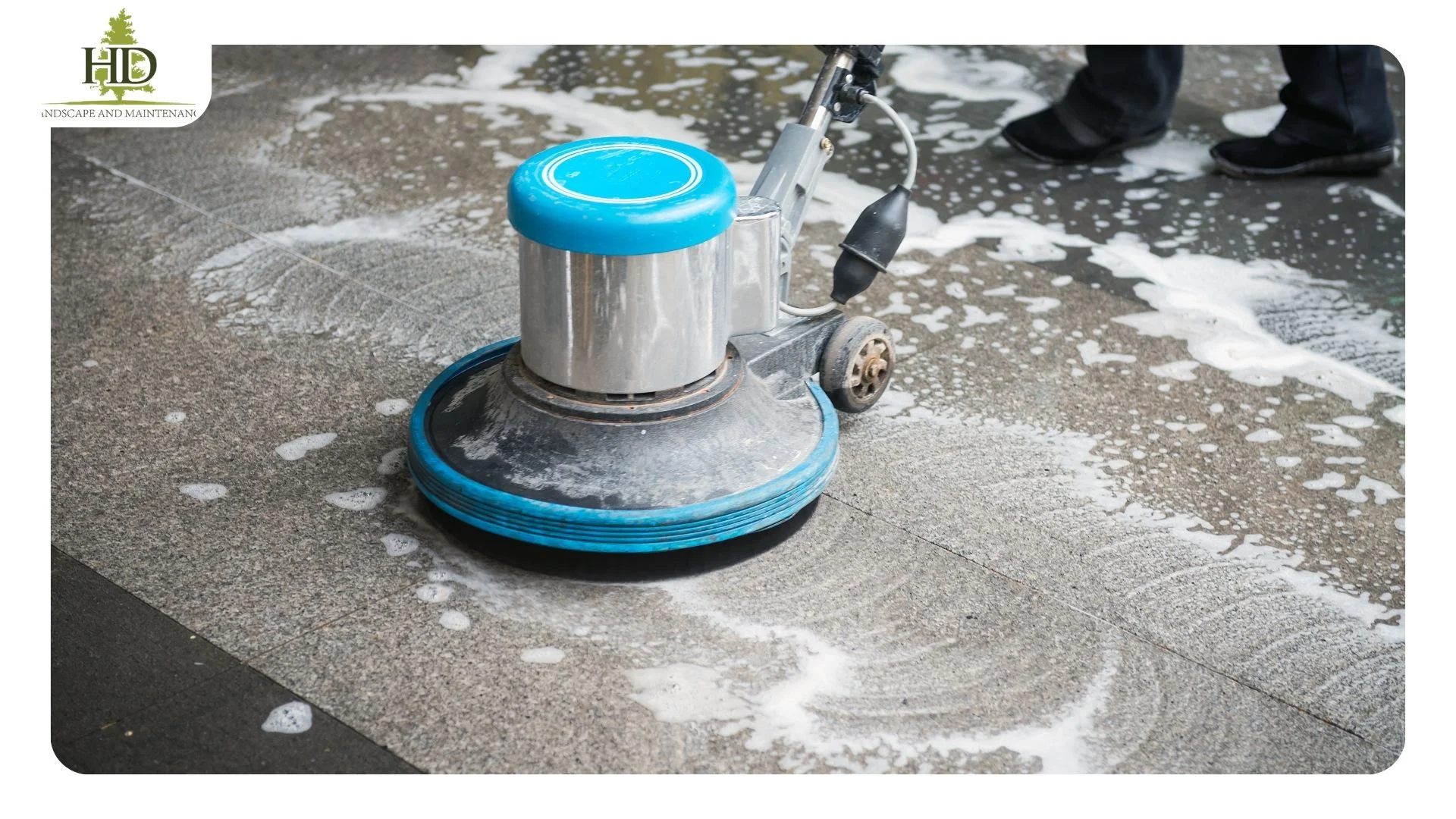
Maintenance here is a calendar, not a checklist
Anywhere with a drier summer and a colder winter, you can do most hardscape upkeep whenever you get round to it. Portland does not work that way. We get a long wet season and a short reliably dry one, and almost every worthwhile maintenance task depends on the surface being genuinely dry — not merely rain-free that afternoon.
That single constraint reorders everything. The work is not difficult; the scheduling is. A patio washed in November looks good for three weeks and then greens over. Sealer applied to pavers that felt dry on top but held moisture underneath goes cloudy and has to be stripped.
So the useful way to think about hardscape upkeep in this region is as a year, not a job list.
Late spring. The main wash, once the surface has had consecutive dry days. This is also when winter damage becomes visible — settled areas, lifted edges, joints that emptied out over the wet months.
Summer. The only dependable window for joint sand and for sealing. If either is on your list, this is when it happens, and it is the reason our schedule fills earliest here.
Early autumn. Clear organic debris before it mats down and sits wet all winter. This is the single highest-value hour anyone spends on their hardscape, and the one most often skipped.
Winter. Keep drains and channels clear, watch for movement, and resist the urge to attack green growth with a pressure washer in February — it will be back before the surface has dried.
Where the wash water is allowed to go
This is the part of paver cleaning almost nobody discusses, and in Portland it carries real consequences.
Portland City Code 17.39 prohibits the discharge of wash water from pressure washing into the city’s stormwater system. The reasoning is direct: many storm drains in Portland flow to a river or stream with no treatment in between, so what leaves your patio can end up in the Willamette. The city states that discharging prohibited material may lead to investigations, penalties, and required corrective actions.
Two related provisions tighten it further. City Code 17.32 prohibits directing water from any source onto a city sidewalk, street, easement, or right-of-way without authorization — which rules out the common habit of simply chasing the dirty water off the front walk and into the gutter. And City Code 17.34 requires approval before discharging to the sanitary sewer, so that is not an automatic alternative either.
What compliant cleaning actually looks like, following the city’s own recommended practices:
- Schedule the work in dry weather, so rain is not carrying wash water off-site for you
- Place temporary barriers around storm drains and inlets near the work area
- Keep wash water contained within the work area rather than letting it run
- Sweep up visible solids rather than flushing them
- Where the wash water is non-toxic, divert it onto vegetated or unpaved ground on the property so it infiltrates instead of entering the storm system
That last point is the practical answer for most residential patios, and it is why containment and site layout get discussed before anyone starts a machine.
It is also worth knowing that commercial mobile washing operations discharging to the sewer need a Mobile Washer Discharge Authorization from Environmental Services — power washing services are named specifically. If you are hiring anyone to clean hardscape in Portland, asking how they handle wash water is a fair and revealing question.
Joint sand: when it needs topping up
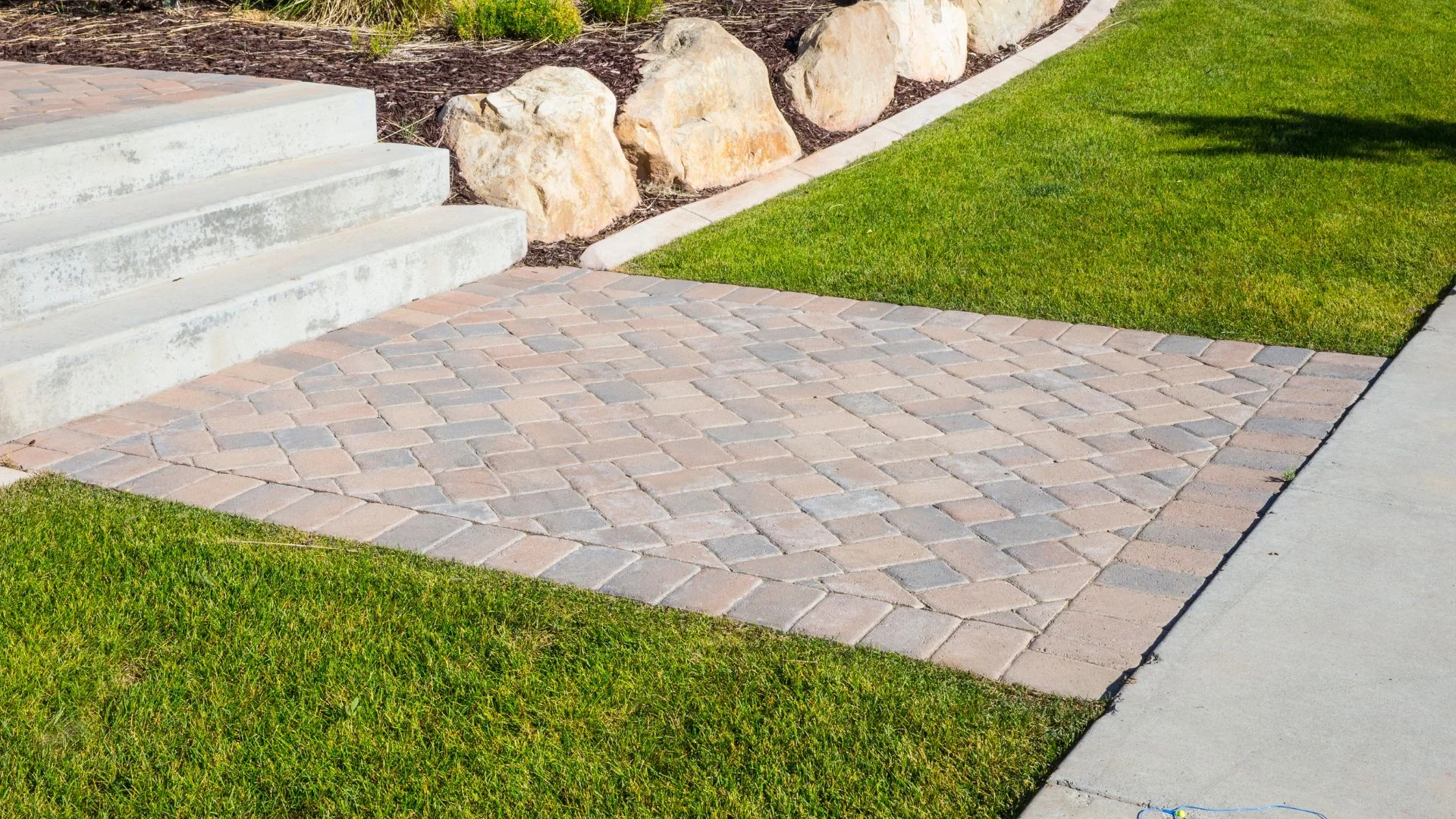
Joints lose material gradually through rain, foot traffic, and cleaning. You notice it when weeds begin appearing in lines, when the pavers start to feel individually loose underfoot, or when you can see daylight down the side of a unit.
Refilling is straightforward. Getting it to stay is about timing: joints must be dry to their full depth before new material goes in, which in practice means summer. Sand placed into damp joints does not settle or set properly and washes out the following winter, which is why this job so often gets done twice.
If joints are emptying faster than they should, the cause is usually water movement rather than the sand — and that is a repair question rather than a maintenance one. Our hardscape repair guide covers what that looks like. For the material science of different jointing products, what makes hardscaping in Portland different goes deeper.
Sealing: what it does, and what it doesn’t
We seal pavers, and we would rather tell you honestly when it is worth doing.
What sealing genuinely does. It slows staining, makes organic growth easier to remove rather than preventing it, deepens colour if you choose that finish, and helps hold jointing material in place where a joint-stabilising product is used.
What it does not do. It does not stop moss and algae — spores land on sealed surfaces just as readily, and in a climate this damp they will. It does not fix settlement, prevent weeds arriving from above, or extend the life of a failing base.
The timing is not negotiable. Pavers must be fully dry through their depth, not just dry to the touch. Sealing over trapped moisture is what produces the cloudy, milky finish people end up paying to have stripped off. In Portland that means a settled stretch of summer weather, following a wash with enough drying days after it.
Most residential hardscape wants resealing every three to five years or so, depending on exposure, traffic, and the product used. Shaded north-facing areas and anything under trees sit at the shorter end.
Sealing is genuinely optional. A well-built patio with sound joints survives fine without it. If you like the look and want easier cleaning, it earns its keep; if someone tells you it is essential maintenance, they are selling.
Recurring seasonal maintenance
Most of our maintenance customers move to a recurring schedule after the first visit, for the simple reason that the timing is the difficult part and a schedule removes it from their hands.
A recurring plan typically covers the main seasonal wash, debris clearance before winter, joint inspection with top-up as needed, drainage and channel checks, and early flagging of movement while it is still small. Sealing sits on its own multi-year cycle rather than in the annual round. Scope is set per property, since a shaded patio under firs and an open south-facing driveway need genuinely different attention.
Talk to us about what your hardscape actually needs — plans are built around the site rather than sold as tiers.
What hardscape maintenance costs
We price per property after seeing it. What moves the number:
- Surface area, and how much of it is intricate detail work versus open field
- Current condition, since a first clean after several neglected years is not a maintenance visit
- Surface type, as sealed pavers, unsealed concrete, and natural stone behave differently
- Shade and tree cover, the single biggest driver of how fast growth returns
- Wash water containment, which depends on site layout and available infiltration area
- Access, both for equipment and for water supply
- Whether sealing or joint work is included, each with its own material cost
- One-off versus recurring, as scheduled work is priced differently from a single visit
The site visit and written estimate are free.
Where we work
We maintain hardscape across Portland and the surrounding metro, Monday to Saturday, from our base in Aloha — including Southeast and Northeast Portland, Multnomah Village, and out to Milwaukie, Gresham, Beaverton, and Lake Oswego. Our hardscaping services and seasonal and specialised services pages cover full scope, and the Portland page lists the wider service area. In Clackamas County, see our Lake Oswego pressure washing guide.
Frequently Asked Questions
How much does hardscape maintenance cost in Portland?
We price per property after a site visit. The drivers are surface area and how much of it is detail work, current condition, surface type, shade and tree cover, how wash water can be contained and infiltrated on site, access for equipment and water, whether sealing or joint work is included, and whether the work is a one-off or part of a recurring schedule. A first clean after years without attention is priced differently from an ongoing maintenance visit. The estimate is free.
How often should pavers be cleaned and sealed here?
Most Portland hardscape wants a thorough clean once a year, usually in late spring, with shaded areas under trees sometimes needing more. Sealing is a longer cycle at roughly every three to five years, depending on exposure, traffic, and product. Both depend more on dry weather than on the calendar date — pavers must be genuinely dry through their depth before sealing, which in practice restricts it to settled summer conditions.
Do you offer recurring seasonal hardscape maintenance plans?
Yes. Most customers move to a recurring schedule after their first visit, because timing the work to the weather is the hard part. A plan typically covers the main seasonal wash, debris clearance before winter, joint inspection and top-up, drainage checks, and early flagging of movement. Sealing runs on its own multi-year cycle. Scope is set per property rather than sold as fixed tiers.
Do you remove moss and replace washed-out joint sand?
Yes, both. Moss and algae are a fact of hardscape life in this climate and come off during the seasonal clean; the realistic goal is managing them rather than eliminating them permanently. Joint sand is topped up once joints are dry to their full depth, which is why we schedule that work in summer — material placed into damp joints washes straight back out over winter.
Does sealing pavers help through wet winters?
It helps with some things and not others. Sealing slows staining and makes organic growth easier to remove, and a joint-stabilising sealer helps hold jointing material in place. It does not prevent moss or algae, and it does not address settlement or drainage problems. It must be applied to fully dry pavers — sealing over trapped moisture causes a cloudy finish that has to be stripped. Sealing is worth doing if you want the look and easier cleaning, but a sound patio does not require it.
Visit or Call Us
HD Landscape and Maintenance LLC
Adress:6581 SW 192nd Ave Aloha, OR 97007
Phone: (971) 336-5520
Email: hdlandscapellc@gmail.com
Hours: Monday–Saturday, 7:00 am – 7:00 pm · Sunday closed
Oregon LCB Lic. #9977 · Licensed, bonded & insured
Serving Portland and the surrounding metro, including Beaverton, Tigard, Lake Oswego, West Linn, Milwaukie, Gresham, Hillsboro, and Tualatin.


 4.9Top Rated Service 2026verified by TrustindexTrustindex verifies that the company has a review score above 4.5, based on reviews collected on Google over the past 12 months, qualifying it to receive the Top Rated Certificate.