Who Repairs Failing Retaining Walls Near Me?
Recent Post
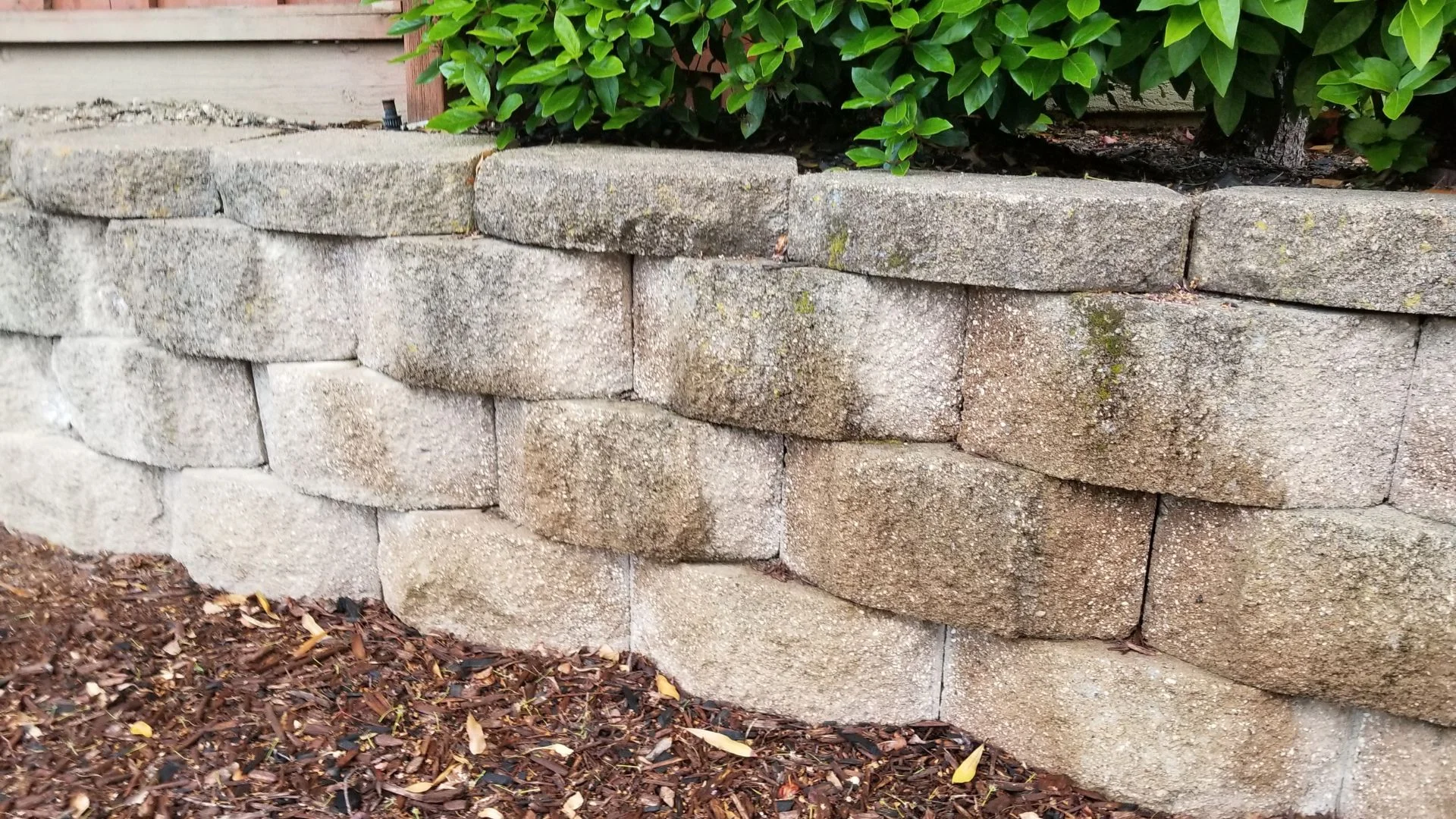
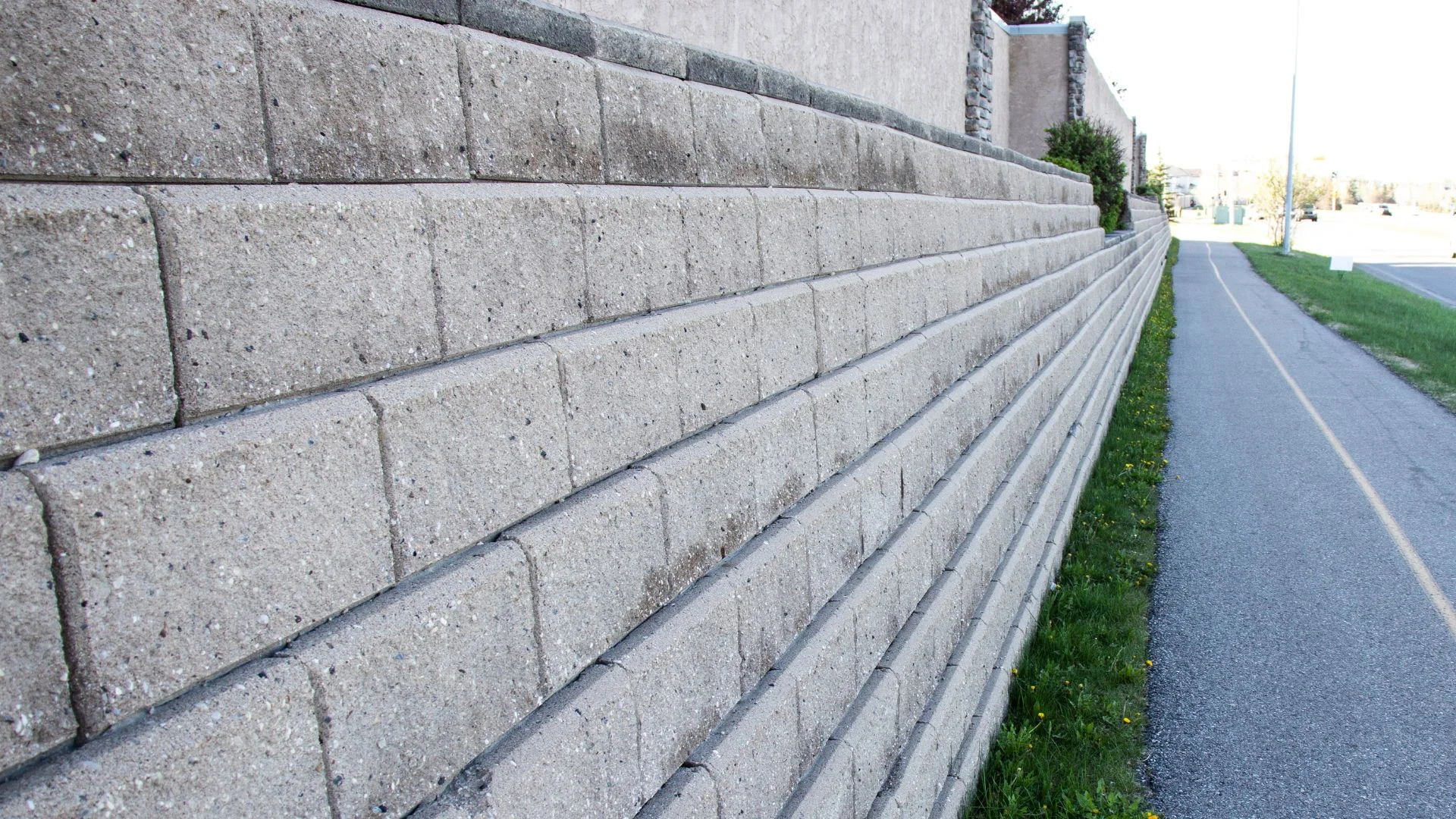
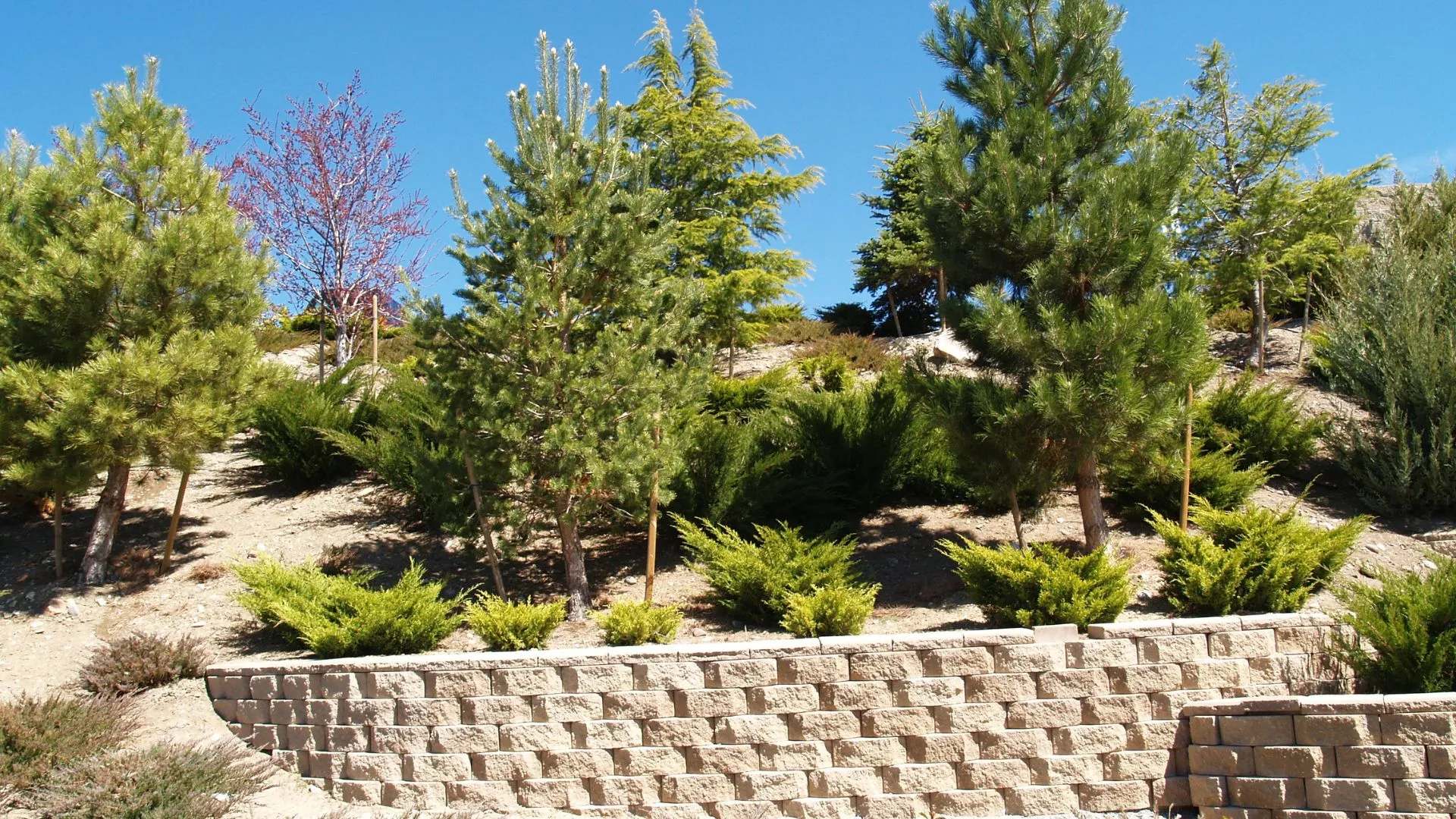
HD Landscape and Maintenance assesses and repairs failing retaining walls across the Portland metro and Clackamas County. A moving wall is telling you something specific, and the shape of the movement usually identifies the cause before anything is excavated. We look first, then quote — and we tell you when the wall is not yours to pay for.
By Donavan Hesedahl, Founder & Owner · Last updated September 2026
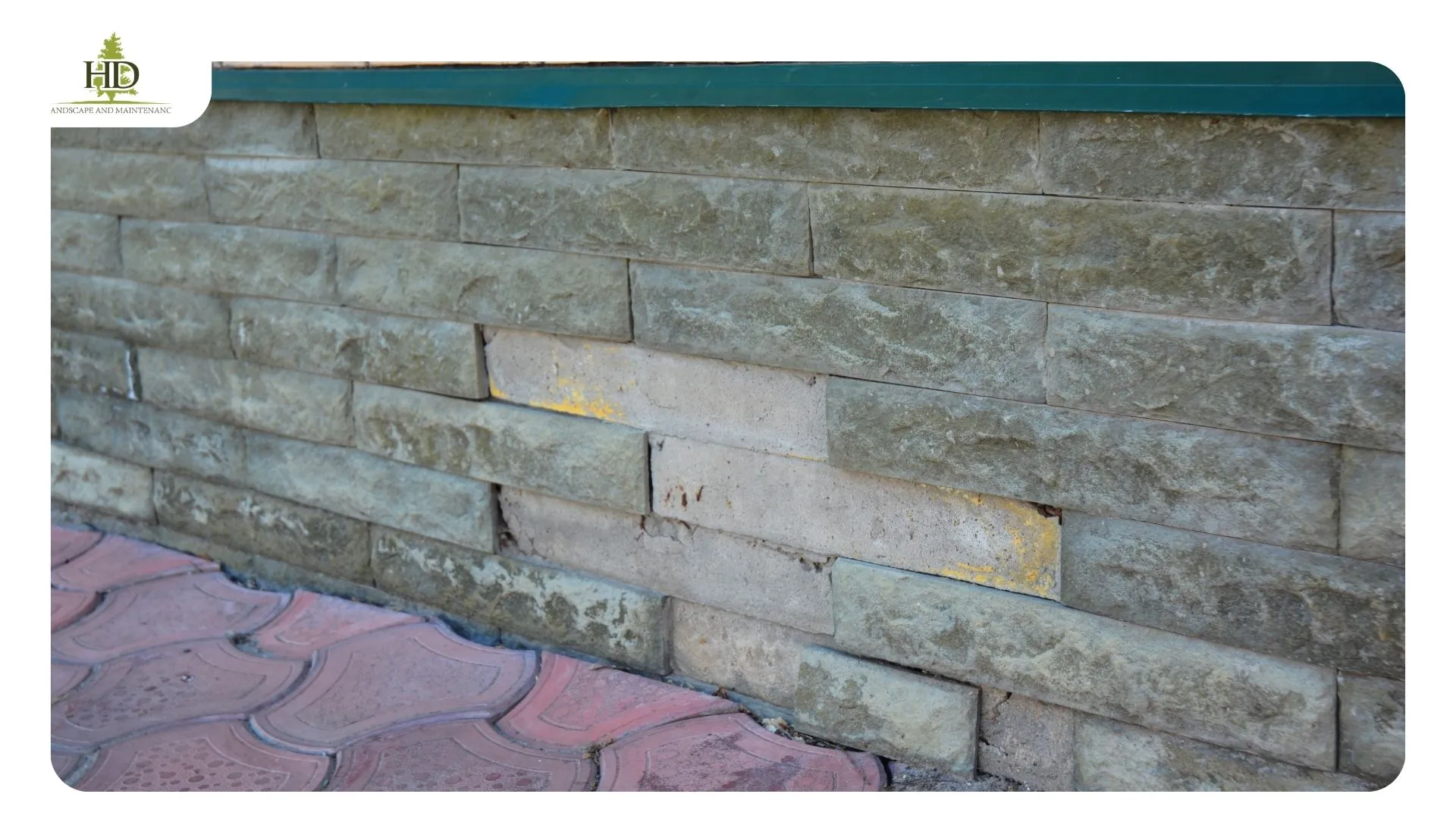
Read the movement before you price the fix
Retaining walls rarely fail suddenly. They announce it for a year or more, and the pattern of movement tells you which failure mode you are dealing with.
Tilting outward at the top. The wall is rotating forward about its base. This is the classic sign of pressure building behind it — usually water that cannot escape, sometimes a load added above it that the wall was never designed to carry.
Bulging in the middle while the ends stay put. Localised pressure, often a blocked or absent drainage path concentrated in one section. A wall that bows rather than leans is frequently repairable in that section alone.
Sliding forward at the base. The whole wall is translating rather than rotating. This points to the foundation rather than the backfill, and it is the most serious of the common patterns.
Stepped cracking or separation at the ends. Differential settlement — part of the wall is on ground that is moving and part is not.
Soil, silt, or water appearing at the base after rain. Material is migrating out through the wall. Whatever is washing out is leaving a void behind, and the movement follows.
Blocks separating at the joints. The units are losing their interlock, either from pressure or because the reinforcement behind them has failed.
Photograph it now, and photograph it again after the next wet spell. Movement that changes measurably over a season is urgent in a way that static, long-standing lean is not.
Why walls fail in this climate
Almost always water, and almost always a decision made at construction rather than a defect that appeared later.
Drainage is the first cause. A wall holds back soil, but the drainage assembly behind it holds back the water pressure, and saturated soil pushes far harder than dry soil does. Between October and May there is more than enough rain here to find any weakness in that system. Where the collection pipe was omitted, undersized, crushed, or taken to no real outlet, pressure has nowhere to go.
Then the base. A footing that is too shallow, too narrow, or placed on unprepared ground will move regardless of how good the blocks are.
Then reinforcement. Taller walls need geogrid extending back into the retained soil, and a wall built above the height its design allows without that reinforcement is on a schedule rather than a risk.
Then surcharge added afterwards. A wall designed for a garden that later acquired a patio, a parking area, a shed, or a hot tub above it is carrying loads that were never in the calculation.
And roots. A tree growing behind or beside a wall applies pressure that increases every year.
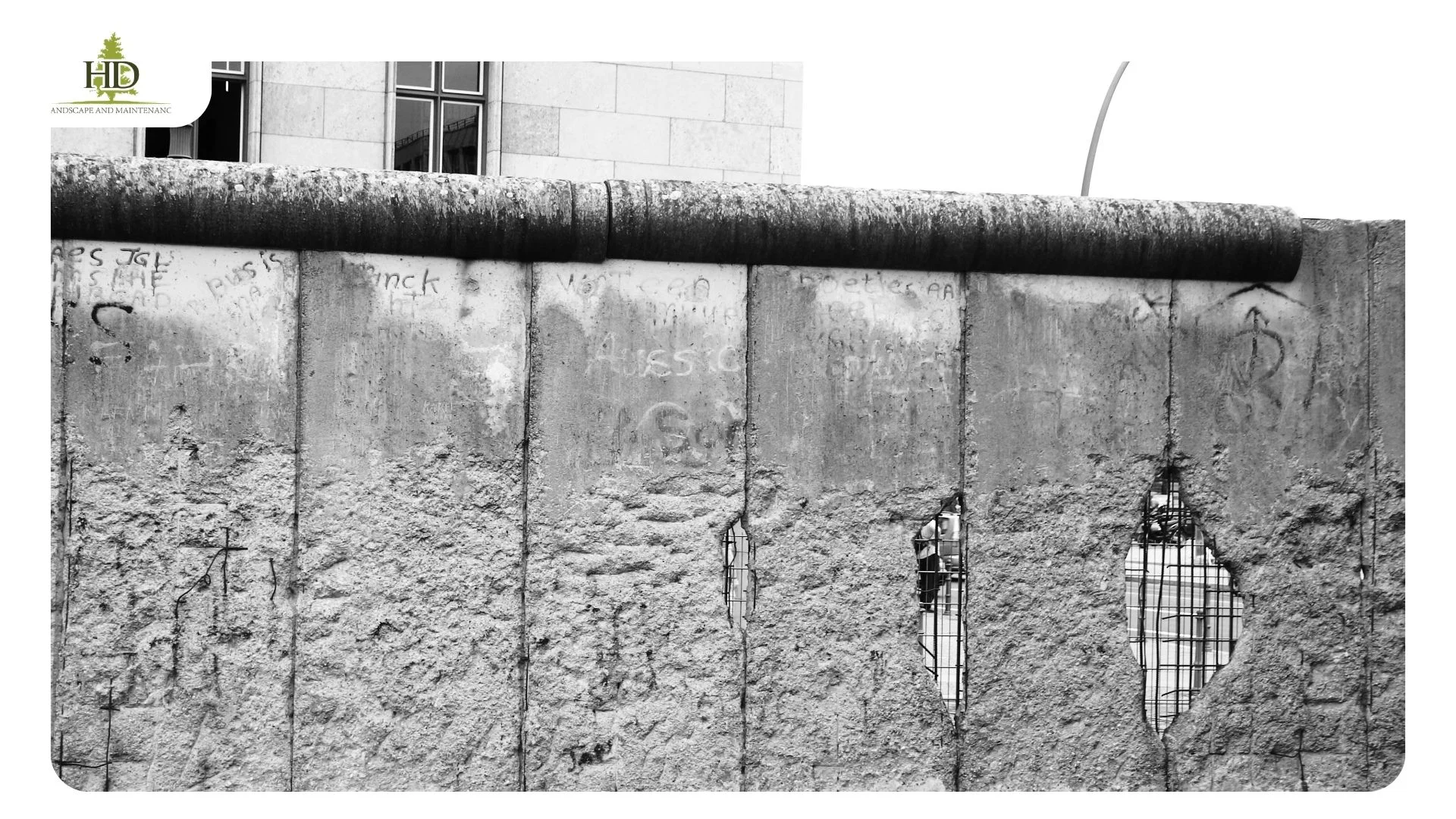
Before you pay: is it actually your wall?
This is the question almost nobody asks, and it can be the most valuable one on this page.
Under the common law doctrine of lateral support, a landowner is entitled to have their land supported in its natural state by the adjoining land. Where a neighbour excavates and removes that natural support, liability for the resulting damage generally rests with whoever did the excavating — and in the case of land in its natural state, that liability can attach regardless of negligence.
Applied to retaining walls, the practical implication runs against most people’s instincts. A wall sitting along your lower boundary was frequently created by the downhill owner cutting into the slope to level their own ground. The wall exists because of that excavation, and responsibility often follows the excavation rather than the location of the structure.
Two things worth knowing before you assume:
A retaining wall is not a fence. Oregon statute addresses partition fences and the sharing of their costs between adjoining owners under ORS chapter 96. People hear about that 50/50 fence principle and apply it to a retaining wall, which is a structural element rather than a boundary marker and is not governed by the same rules.
Where the wall sits is not the whole answer. Ownership and responsibility turn on the deed, an accurate survey, any recorded easements, the history of who excavated or filled, and sometimes on covenants or municipal requirements. Walls that straddle a boundary are common and are exactly where assumptions get expensive.
We are a landscape contractor, not a law firm, and nothing here is legal advice. But when we assess a wall near a boundary we will tell you plainly if we think the responsibility question is open, because finding out afterwards that you funded a neighbour’s obligation is a bad outcome we would rather you avoid. A survey and an hour with a property attorney is cheap relative to a wall.
Repair, rebuild, or monitor
Repair in place suits localised bulging where the rest of the wall is sound, drainage problems that can be corrected from behind, sections that have lost interlock without the base moving, and cap or facing damage. We take the affected section down, fix what caused it, and rebuild.
Full rebuild is the honest answer when the base is moving, when the wall is leaning along its whole length, when it was built above the height its design supports without reinforcement, or when new loads above it have changed what it needs to be. Resetting the face of a wall that is failing structurally buys a season and costs you the repair twice.
Monitoring is legitimate for old walls with long-standing lean that is not progressing. Not every imperfect wall is an emergency. We will say so when that is the case rather than selling you a rebuild.
Walls over four feet, and walls carrying a surcharge, fall under permitting and generally require stamped structural design — so a rebuild at that scale involves an engineer registered in Oregon. Our retaining wall services page covers construction standards, and the Clackamas County hillside guide covers sloped sites where land-use review applies.
What retaining wall companies charge for repair
Repair pricing is harder to generalise than new construction, because scope is not fully known until something is opened up. The drivers:
- Failure mode, since a drainage correction and a foundation problem are different jobs entirely
- Extent, meaning one bulging section versus the whole length
- Height and surcharge, which determine whether engineering is involved
- What caused it, because a repair that does not fix the cause is a temporary one
- Drainage outlet distance, often the largest hidden cost on a sloped lot
- Access, since repair usually means working through a finished garden
- Material availability, where matching an older block is not always possible
- Permitting, where height or surcharge brings it into scope
We assess on site and quote in writing. Anyone giving you a repair figure over the phone is guessing at the part that matters.
Where we work
We repair retaining walls across the Portland metro and Clackamas County, Monday to Saturday, from our base in Aloha — including Lake Oswego, West Linn, Milwaukie, Oregon City, Tualatin, Beaverton, Tigard, and Portland itself. See our Lake Oswego page, the Portland page, or the portfolio.
Frequently Asked Questions
What areas around Lake Oswego do you serve?
We work throughout Lake Oswego and the surrounding area, including West Linn, Tualatin, Milwaukie, Oregon City, and across Clackamas County, as well as Portland, Beaverton, and Tigard. We operate Monday to Saturday from our base in Aloha. If you are unsure whether your address is in range, call and ask — it usually is.
Are you bonded and insured?
Yes. HD Landscape and Maintenance is licensed through the Oregon Landscape Contractors Board, licence #9977, and maintaining a surety bond and liability insurance is a condition of that licensure. You can confirm our current standing yourself through the Oregon LCB public lookup rather than taking our word for it.
Do you repair leaning or failing retaining walls?
Yes, and we start by identifying the failure mode, because the pattern of movement points to the cause. Localised bulging, lost interlock, and drainage faults can often be repaired in place by taking down the affected section and correcting what caused it. Walls sliding at the base, leaning along their full length, or built beyond the height their design supports usually need rebuilding. Where lean is long-standing and not progressing, monitoring can be the right answer.
Do walls over four feet need an engineer?
Generally yes. Walls over four feet in height, and walls of any height carrying a surcharge such as a driveway, structure, or slope above them, fall under permitting requirements and typically require stamped structural design. That design is produced by an engineer registered in Oregon, and the wall is then built to the approved drawings. Height is normally measured from the bottom of the footing rather than from finished grade, so walls cross that threshold sooner than owners expect.
Do you offer free on-site retaining wall consultations?
Yes. We come out, read the wall, and follow up with a written assessment and quote at no cost and no obligation. Where the wall sits on or near a boundary we will also flag if we think the question of whose wall it is deserves a closer look before you commit to paying for it.
Visit or Call Us
HD Landscape and Maintenance LLC
Address: 7940 SW 191st Ave Aloha, OR 97007
Phone: (971) 336-5520
Email: hdlandscapellc@gmail.com
Hours: Monday–Saturday, 7:00 am – 7:00 pm · Sunday closed
Oregon LCB Lic. #9977 · Licensed, bonded & insured
Serving the Portland metro and Clackamas County, including Lake Oswego, West Linn, Milwaukie, Oregon City, Tualatin, Portland, Beaverton, and Tigard.