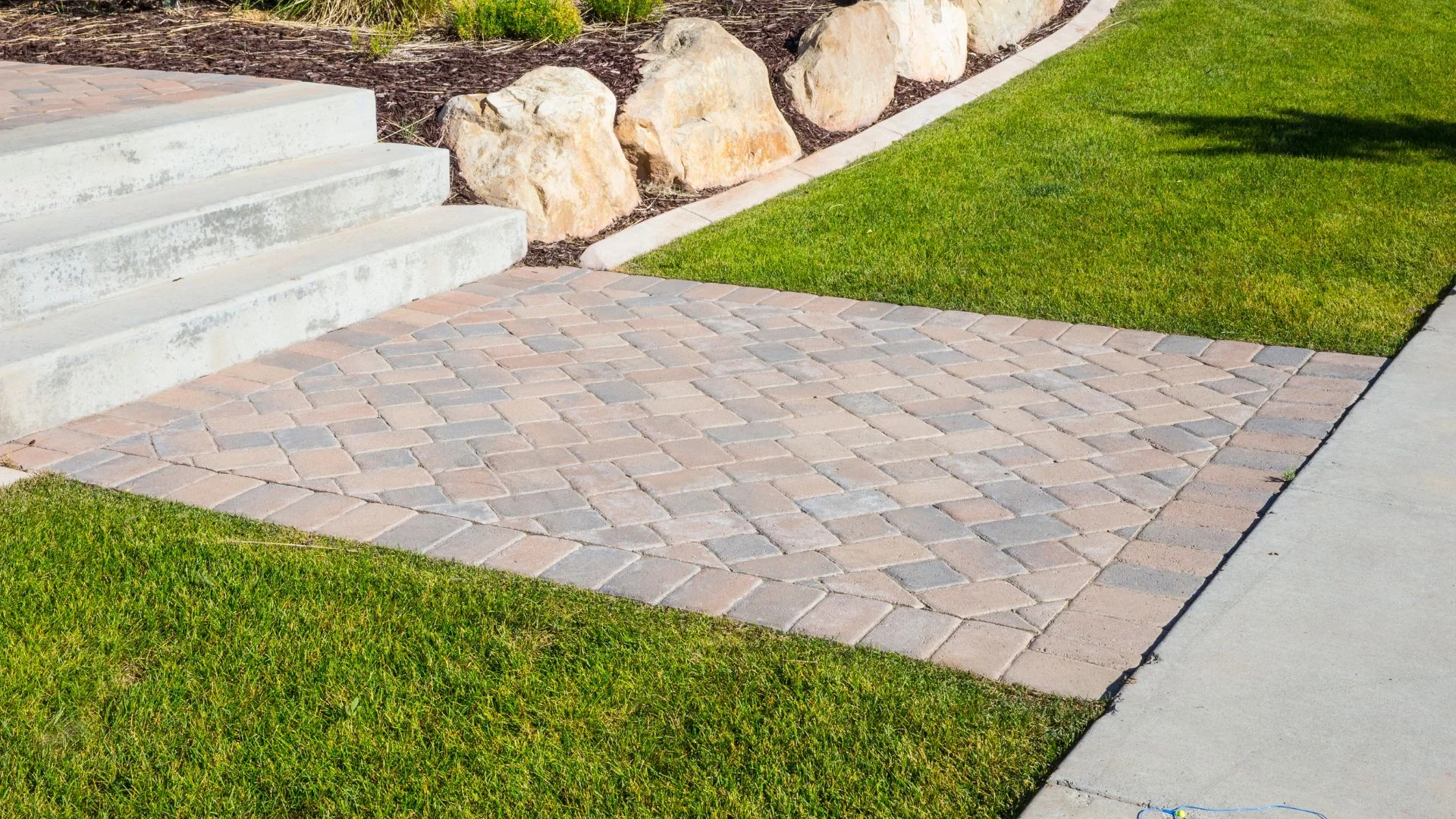
HD Landscape and Maintenance installs paver walkways in Portland, OR — concrete, clay brick, natural stone, and permeable systems. Permeable pavers aren’t required here, but Portland’s stormwater rules apply from 500 square feet of new impervious surface, which is a low bar and worth checking before you pick a material. Oregon LCB #9977.
By Donavan Hesedahl, Owner/Operator · Last updated July 2026
Are permeable pavers required in Portland?
No. Permeable pavers are not required for a residential walkway in Portland. But the reason people ask is legitimate, and the actual rule is worth understanding before you choose a material.
Portland’s 2025 Stormwater Management Manual — effective March 1, 2025, authorised by Portland City Code 17.38 — sets stormwater requirements for all development, redevelopment, and improvement projects on private and public property in the city. Portland’s trigger threshold is 500 square feet of new or replaced impervious surface, which is unusually low compared with most jurisdictions.
The manual works through a hierarchy: infiltration first, then detention with water quality treatment, and discharge into the city system only as a last resort. Its site design requirements also direct projects to minimise impervious area — and permeable pavement is one of the approved methods for doing that. Approved, not mandated.
There’s a specific exemption that often covers walkways. Projects otherwise subject to the SWMM may be exempt from providing a separate stormwater facility for drainage basins totalling 500 square feet or less of pedestrian-only impervious surface or residential driveway. Two conditions attach: you have to demonstrate that runoff from those basins can’t be routed to other proposed stormwater facilities, and the runoff must shed to adjacent vegetation or other pervious areas on the property where feasible.
For a typical front walkway — three to four feet wide, thirty to sixty feet long — you’re often under that threshold. Where it gets interesting is when the walkway is part of a larger project. A walkway plus a patio plus a driveway apron can cross 500 square feet in combination even though no single element does, and the threshold looks at total new or replaced impervious area rather than at each piece in isolation.
When permeable genuinely makes sense:
- The project total pushes past 500 square feet and you’d rather infiltrate than build a separate facility
- The site has nowhere sensible for runoff to shed
- You’ve got standing water or a drainage problem you want the hardscape to help solve rather than worsen
One caveat worth knowing before you budget around an incentive. Portland’s Clean River Rewards program offers stormwater billing discounts, and the city lists permeable pavement meeting SWMM safety and space requirements as eligible for commercial, multi-family residential, and industrial accounts. If you’re a single-family homeowner counting on a permeable paver walkway to earn a bill discount, verify eligibility with BES before you commit to the extra cost — don’t assume it.
What's the best paver for a Portland walkway?
Material choice here is driven by two things people underweight: slip resistance when wet, and what happens on a shaded north-facing path. In a climate with months of rain and mature tree canopy, a beautiful walkway that’s slick from November to April is a failed walkway.
Concrete interlocking pavers — the default for most Portland residential work.
- Strengths: huge range of shapes, colours, and textures; consistent dimensions make for tight joints and clean patterns; strongest per dollar; readily available replacements if a unit gets stained or damaged.
- Limits: colour can fade over decades, and cheaper units show wear faster.
- Best for: most walkways, most budgets, and any layout with curves or a pattern.
Clay brick pavers — traditional, and a natural fit next to Portland’s older housing stock.
- Strengths: colour is fired through the body so it doesn’t fade; ages well; the right look for a Craftsman, Tudor, or Old Portland foursquare.
- Limits: narrower size and shape range, higher cost, and smooth-faced brick can get genuinely slippery once algae establishes in shade.
- Best for: period-appropriate work in Irvington, Laurelhurst, Alameda, and Ladd’s Addition, in sunnier positions or with a textured face.
Natural stone — bluestone, basalt, granite setts, flagstone.
- Strengths: nothing else looks like it; basalt in particular reads as local because it is.
- Limits: highest cost, irregular thickness complicates setting, and smooth-sawn stone is the slickest option available when wet. Specify a thermal, flamed, or riven finish rather than honed or polished.
- Best for: premium projects, naturalistic settings, and wooded lots where the walkway should feel like it belongs.
Permeable paver systems — pervious pavers with open, aggregate-filled joints over a gravel reservoir.
- Strengths: infiltrates rather than sheds, helps with SWMM compliance on larger projects, and eliminates puddling.
- Limits: costs more, needs a deeper excavation for the reservoir, requires periodic joint vacuuming to stay functional, and needs sufficient separation from foundations and property lines.
- Best for: projects over the impervious threshold, drainage-problem sites, and anywhere you want water going down instead of sideways.
For Pacific Northwest weather specifically: textured concrete pavers are the safest all-round answer. Whatever you choose, ask about the surface finish and picture it in February.
Why paver walkways fail in Portland — and why it isn't cracking
Concrete slabs crack. Paver walkways generally don’t, and the reason is structural: a paver walkway is a flexible system. Individual units move independently and the sand-filled joints absorb movement that would fracture a monolithic slab. Freeze-thaw cycling that spalls concrete usually leaves properly installed pavers alone — and Portland sits in USDA Zone 8b with winter minimums around 15–20°F, so our freeze-thaw exposure is mild by national standards.
What actually fails here is the base, and the cause is almost always water. Same story as retaining walls in Portland — in this climate, water is the load.
The four failure modes we get called out to fix:
- Base too thin or the wrong material. Native clay or unwashed fill instead of properly graded, compacted crushed aggregate. It holds water, it moves, the surface goes with it.
- Insufficient compaction, or compaction in one lift. Aggregate has to go down and be compacted in lifts. Rushing this is invisible on handover day and obvious in year three.
- No edge restraint. Without a restrained perimeter the field creeps outward, joints open, sand washes out, units rock. Portland’s own permeable pavement guidance points to the SWMM for required edge restraints — and edge restraint matters on conventional systems too.
- Water routed under the walkway instead of away from it. A downspout discharging beside a walkway, or a walkway set lower than the surrounding grade, turns the base into a sump.
One Portland-specific construction note that matters on permeable systems: protect the subgrade from over-compaction during excavation. It’s counterintuitive, since everything else in hardscape rewards compaction — but on a permeable system the native soil beneath the reservoir has to stay able to infiltrate. Over-compact it and you’ve built an expensive detention basin with nowhere to drain.
Two other Portland realities to design around: tree roots and settlement near foundations. Mature street trees and yard trees will eventually lift a walkway set directly over a major root run, which is why alignment matters and why removing roots two inches or larger has its own implications. And backfill near a foundation that was never properly compacted will settle regardless of how well the walkway itself was built.
Sealing, moss, and maintenance in a wet climate
Do paver walkways need to be sealed in Portland? No — sealing is optional, and it’s a genuine trade-off here rather than an automatic upgrade.
What sealing does: deepens colour, makes stain removal easier, and helps stabilise joint sand.
What it costs you in this climate: sealers need a properly dry substrate to cure, and Portland gives you a narrow window for that. Seal over trapped moisture and you get hazing or a milky blush. Film-forming sealers can also make a smooth paver more slippery when wet, which is the opposite of what you want on a shaded path. And it’s recurring — typically every three to five years.
And never seal a permeable system. Sealing closes the joints, which is the entire mechanism. It converts a permeable walkway into an impervious one, which can also undo the stormwater basis on which the project was approved.
What actually matters more than sealing on a Portland walkway:
- Moss and algae control. North-facing and canopy-shaded walkways will grow moss. It’s a slip hazard first and a cosmetic issue second. Regular cleaning, and improving light or air movement where possible, does more than any product.
- Joint sand upkeep. Polymeric sand resists washout better than plain sand and suppresses weeds in the joints. It needs topping up over the years.
- Keeping water moving. Check that downspouts and grade still direct water away, especially after any other landscape work.
- Permeable systems need periodic vacuuming of the joint aggregate to stay functional. Skipping it silts the system closed within a few years.
How much do paver walkways cost?
Paver walkways are priced per square foot installed, and the surface material is a smaller share of the number than most people expect. Excavation, base, and access drive it.
Cost drivers: total square footage, paver material and pattern (running bond is faster than herringbone; herringbone is stronger), excavation depth and spoil disposal, site access on Portland’s narrow lots and steep driveways, edge restraint and cuts, and whether stormwater management is triggered.
We quote after seeing access and existing grade, because a wheelbarrow-only site can double labour against an identical walkway a machine can reach.
Installation timeline — and installing pavers over existing concrete
A typical residential walkway takes two to five working days: one day for demolition and excavation, one to two for base placement and compaction, one to two for laying, cutting, edge restraint, and jointing. Add time for larger areas, difficult access, or permeable systems with deeper excavation. Weather matters — base compaction on saturated clay is unreliable, so a sustained wet stretch can push a schedule.
Can pavers go over existing concrete? Sometimes, and it’s worth evaluating rather than assuming either way.
It can work when: the existing slab is structurally sound with no significant cracking or settlement, it already drains correctly, and there’s enough vertical clearance at doors, thresholds, and adjoining grades to add roughly two to three inches of paver plus setting bed.
It doesn’t work when: the slab is cracked or has settled — you’d be building on a failing base — or when added height would create a trip hazard, block a threshold, or trap water against the house. Reflective cracking through the new surface is the usual outcome of overlaying compromised concrete.
Two things to weigh either way: overlaying is cheaper than removal and disposal, but it needs an edge restraint solution since you can’t spike into concrete conventionally. And overlaying does not reduce impervious area — so if stormwater compliance is part of your project, an overlay gets you no credit while a permeable system on an excavated base would.
We’ll tell you honestly which situation you’re in. Overlaying bad concrete to save on demolition is a false economy that shows up within a few winters.
Portland neighborhoods and Multnomah County areas we serve
We’re based in Aloha and work throughout Multnomah County and the Portland metro.
- Southeast Portland — Ladd’s Addition, Laurelhurst, Mt. Tabor, Richmond, Woodstock, Sellwood. Older housing stock where clay brick often suits the architecture, and plenty of failing mid-century concrete walkways due for replacement.
- Northeast Portland — Irvington, Alameda, Rose City Park, Concordia, Cully. Period homes, mature street trees, and root-conflict alignment questions on nearly every front walk.
- Southwest Portland and the West Hills — Hillsdale, Multnomah Village, Portland Heights, Council Crest. Slope, steps, and constrained access; walkways here are frequently a grading problem before they’re a paving problem.
- North Portland — St. Johns, Kenton, Overlook, Arbor Lodge. Flatter, easier access, straightforward front-walk work.
- Northwest Portland — Nob Hill, Willamette Heights. Tight lots, hand-carry access, protected trees close to the work.
Outside Portland proper we serve Gresham, Beaverton, Tigard, Lake Oswego, Tualatin, Hillsboro, and Aloha. Stormwater thresholds and permit rules differ by jurisdiction — Portland’s 500 square foot trigger doesn’t apply in Beaverton or Gresham, and we confirm the governing jurisdiction before quoting.
HD Landscape and Maintenance is an Oregon LCB-licensed landscape contracting business — license #9977, which covers planning and installing walkways, patios, and paving. Request a free Portland paver walkway quote →
Frequently Asked Questions
Do paver walkways need to be sealed in Portland?
No. Sealing is optional and involves real trade-offs in this climate. It deepens colour, eases stain removal, and helps stabilise joint sand — but sealers need a dry substrate to cure properly, and Portland offers a narrow window for that. Sealing over trapped moisture causes hazing, and film-forming sealers can make smooth pavers more slippery when wet, which is the wrong outcome on a shaded path. It also needs redoing every three to five years. Permeable paver systems should never be sealed, since sealing closes the joints that make the system work.
Are permeable pavers required in Portland, OR?
No. Permeable pavers are one approved method of managing stormwater, not a requirement. Portland’s 2025 Stormwater Management Manual applies to all development and redevelopment and triggers at 500 square feet of new or replaced impervious surface — a low threshold nationally. However, projects may be exempt from providing a separate stormwater facility for drainage basins totalling 500 square feet or less of pedestrian-only impervious surface or residential driveway, provided runoff can’t be routed to other proposed facilities and sheds to adjacent pervious areas where feasible. Many single front walkways fall under that. The threshold looks at total new impervious area, so a walkway combined with a patio or driveway can cross it even when no single element does.
Can paver walkways crack in Portland winters?
Individual pavers rarely crack, because a paver walkway is a flexible system — units move independently and sand-filled joints absorb movement that would fracture a concrete slab. Portland’s Zone 8b winters, with minimums around 15–20°F, are also mild for freeze-thaw by national standards. What fails is the base, and the cause is water: base material that’s too thin or the wrong type, inadequate compaction, missing edge restraint, or water routed under the walkway rather than away from it. A properly built base is what determines whether a walkway lasts.
How long does paver walkway installation take?
A typical residential walkway takes two to five working days — roughly one day for demolition and excavation, one to two for base placement and compaction, and one to two for laying, cutting, edge restraint, and jointing. Larger areas, difficult access, and permeable systems with deeper excavation add time. Weather is a factor, since base compaction on saturated clay is unreliable and a sustained wet stretch can delay work.
Can pavers be installed over existing concrete?
Sometimes. It works when the existing slab is structurally sound with no significant cracking or settlement, drains correctly, and there’s enough vertical clearance at doors and adjoining grades for roughly two to three inches of paver and setting bed. It doesn’t work over cracked or settled concrete, where reflective cracking typically appears through the new surface, or where added height would create a trip hazard or trap water against the house. Overlaying also requires a different edge restraint approach and does not reduce impervious area, so it earns no stormwater credit where compliance matters.
How long do paver walkways last?
A properly installed paver walkway on a correct base should last 30 to 50 years or more, and individual damaged or stained units can be lifted and replaced without disturbing the rest — an advantage no poured surface offers. Lifespan is determined by base construction and drainage far more than by paver material. A walkway on an inadequate base can begin settling and rocking within five years regardless of how good the surface units are.
Visit or Call Us
HD Landscape and Maintenance LLC 7940 SW 191st Ave Aloha, OR 97007
Phone: (971) 336-5520
Email: hdlandscapellc@gmail.com
Hours: Monday–Saturday, 7:00 a.m. – 7:00 p.m. · Sunday, Closed
License: Oregon LCB #9977
Serving Portland and surrounding areas including Southeast, Northeast, Southwest, North, and Northwest Portland, plus Gresham, Beaverton, Tigard, Lake Oswego, and Multnomah, Washington, and Clackamas counties.
Request your free Portland retaining wall quote →


 4.9Top Rated Service 2026verified by TrustindexTrustindex verifies that the company has a review score above 4.5, based on reviews collected on Google over the past 12 months, qualifying it to receive the Top Rated Certificate.