A retaining wall contractor in Portland, OR has to build around two local realities: clay soil that traps water and builds pressure behind a wall, and a city permit code that kicks in once a wall passes 4 feet from the footing. Ask any contractor how they handle drainage and at what height they involve an engineer — the answer separates a wall that lasts decades from one that bows in five years.
By Donavan Hesedahl, Founder & Owner · Last updated 12th August 2026
What Does a Retaining Wall Contractor in Portland Build — and From What Materials?
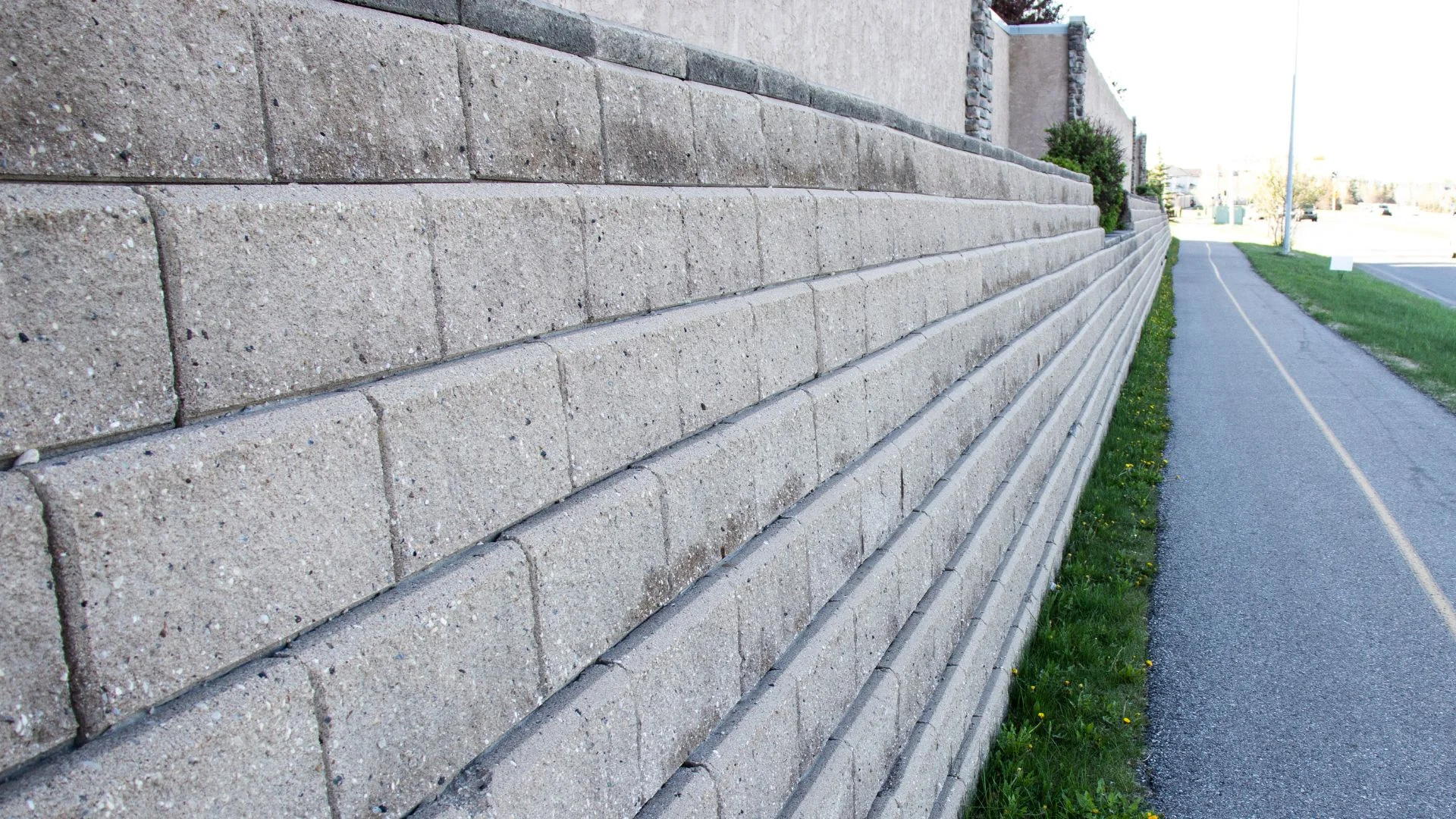
Most of the walls we build fall into three categories: segmental retaining wall (SRW) block, poured or reinforced concrete, and natural stone veneer over a structural core. Straight timber walls still show up in older Portland yards, but we rarely spec new ones — treated lumber rots faster than most homeowners expect once it sits against saturated soil for a decade of PNW winters.
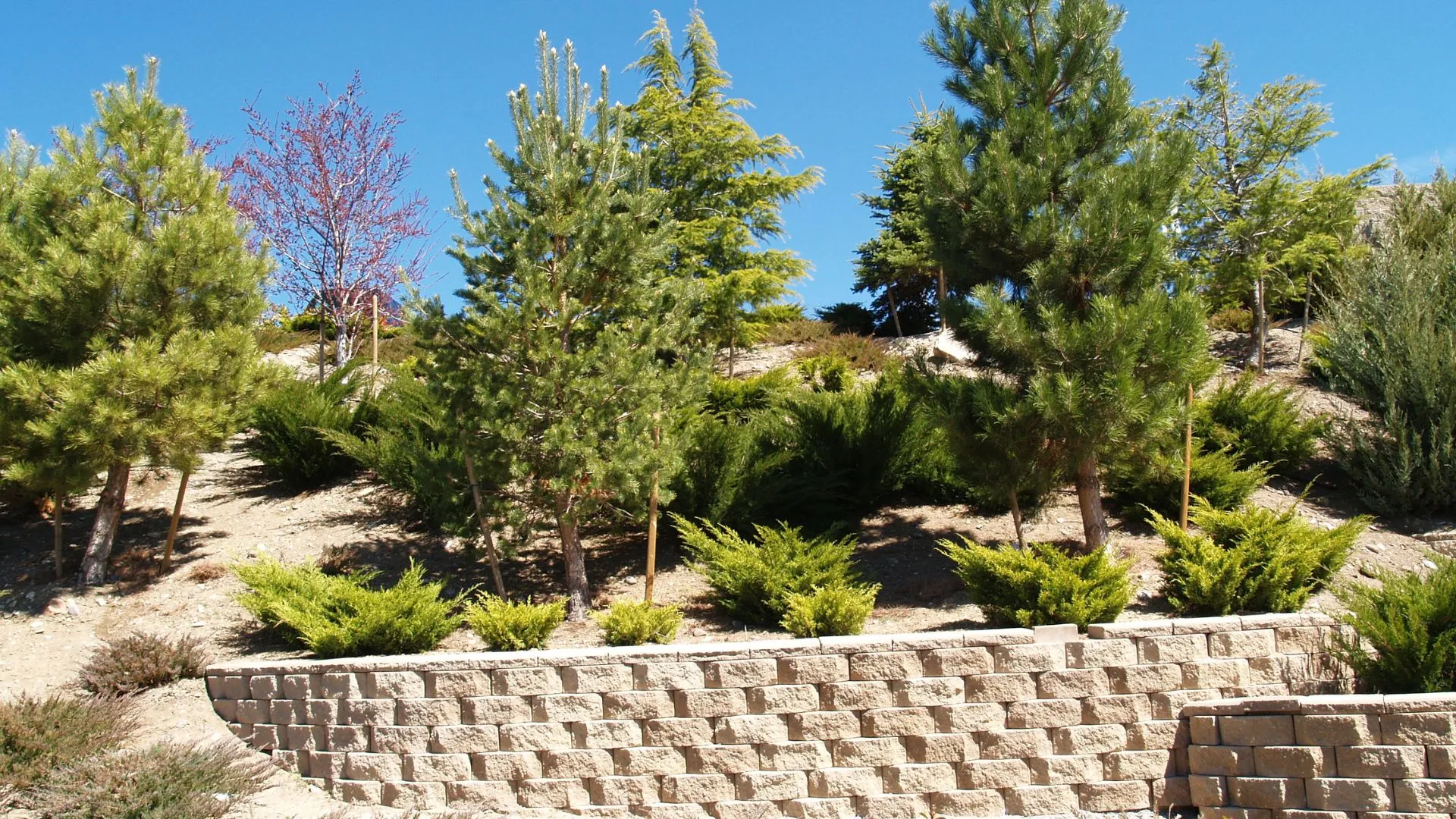
For hillside lots — and Portland has plenty — geogrid-reinforced segmental block is usually the answer. The geogrid ties each course back into the compacted soil behind it, spreading the load across the slope instead of concentrating it against the wall face. It’s also the easiest system to build in tiers, which matters on anything steeper than a gentle grade.
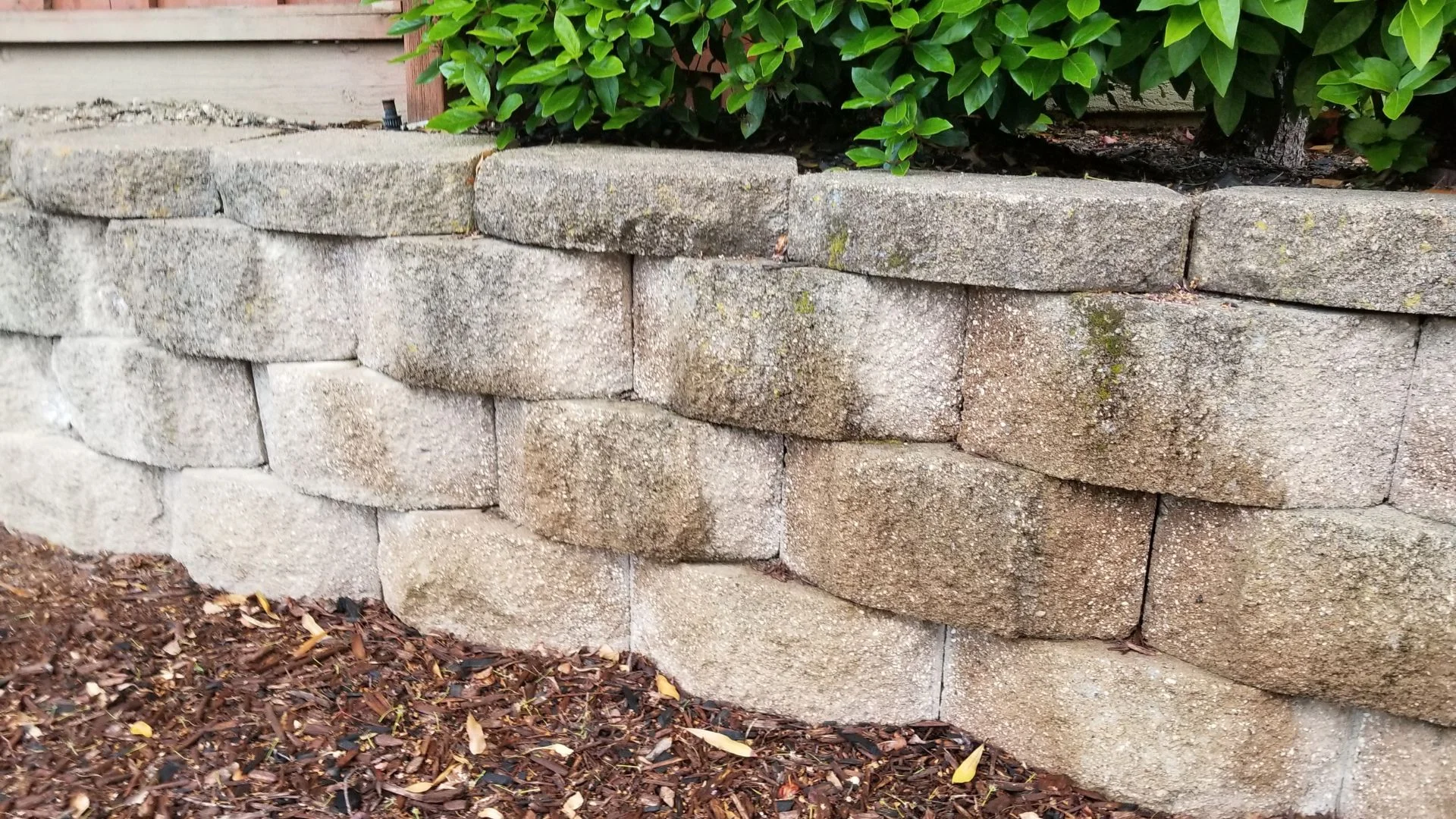
A block retaining wall Portland OR homeowners choose most often is segmental concrete for exactly that reason — it’s modular, repairable one unit at a time if a section ever settles, and rated for the freeze-thaw swings we get most winters. Ask any retaining wall builder Portland OR homeowners have hired before whether geogrid is included on a sloped install; that detail separates a wall that holds for decades from one that bows in five years.
Why Portland’s Wet Clay Soil Changes How a Wall Gets Built
Portland sits on silt and clay loam soils that hold water for most of the wet season, and a retaining wall’s job is to fight that water as much as the soil itself. Left alone, water trapped behind a wall builds hydrostatic pressure that pushes the structure forward — that’s the mechanism behind almost every bowed or cracked retaining wall we get called out to fix.
Every wall we build gets drain rock backfill, a perforated drain pipe daylighted to a safe outlet, and geotextile fabric separating the drain rock from the native clay so the clay can’t migrate in and clog the system over time. On Southwest Portland and West Hills lots — where slope and Portland Hills silt combine — we go deeper on the drain system and often add a second row of weep holes near the base.
Retaining wall installation Portland contractors handle without a real drainage plan is the single most common failure point we see on second-opinion calls. The wall itself is rarely the problem; what’s missing behind it almost always is.
How Much Does a Retaining Wall Cost in Portland, OR?
Budget $40–$70 per face foot for a segmental block wall under 4 feet, and $70–$120 per face foot once height, engineering, and surcharge push the design into permit territory. A typical 40-foot wall in the 3–4 foot range runs roughly $2,400–$4,800 installed; taller, engineered walls climb well past that.
Wall type | Typical 2026 range |
Segmental block, under 4 ft | $40 – $70 / face ft |
Engineered wall, over 4 ft | $70 – $120 / face ft |
Natural stone veneer | $60 – $110 / face ft |
Timber (repair/replacement only) | $30 – $55 / face ft |
Three variables move the number more than material choice does. Height is the biggest — every foot past 4 feet adds engineering, rebar, and inspection cost. Access is second: a wall in a narrow side yard means hauling block and drain rock by hand instead of by machine. Soil condition is third — hitting saturated clay or a hidden spring means a deeper footing and more excavation than the bid assumed.
Permits, Height Limits, and Engineering: What Portland Requires
Yes, once the wall is over 4 feet measured from the bottom of the footing to the top of the wall — not from the ground you can see — or if it supports a driveway, parking area, or ascending slope at any height. Portland’s Bureau of Development Services spells this out in its residential retaining wall guidance, and permitted walls need stamped drawings from an Oregon-registered engineer.
How tall can a retaining wall be without engineering? Under that 4-foot threshold, and without a surcharge load, most Portland walls don’t need a permit or a stamp. On West Hills lots we hit the surcharge trigger constantly, since almost every wall up there is holding back a driveway or a slope, not just flat yard. A retaining wall installer Portland Oregon homeowners can trust on a slope should show you that engineer’s stamp before work starts, not after.
We’re licensed through the Oregon Landscape Contractors Board — LCB #9977 — and you can verify any contractor’s license before signing anything. Oregon also requires a written contract on any landscape project over $2,000, which a permitted retaining wall almost always is.
How Long Does a Well-Built Retaining Wall Last in the PNW?
A properly built segmental block wall with drain rock backfill and weep holes typically lasts 50 years or more — it’s what we recommend for most Portland slopes. Natural stone can match or beat that lifespan but costs more upfront and needs more maintenance in a climate this wet. Timber is the outlier: even pressure-treated lumber tends to rot out in 15–20 years once it sits against saturated clay through enough rainy seasons, which is why we steer most new builds toward block or reinforced concrete instead.
For a block retaining wall builder near me Portland searches surface first, check the license number before the star rating. Anyone can collect reviews; not everyone can pull a permit, order stamped engineering, and stand behind the wall a decade later. For the drainage and base-prep principles that carry over from patios to walls, see our guide to hardscaping in Portland, OR. Our full hardscaping services cover walls alongside patios, walkways, and drainage work as one connected project.
Where We Build Retaining Walls Across the Portland Metro
Retaining wall work changes by geography here, and we plan for that before we ever price a job:
- Southwest Portland and the West Hills — our steepest lots, and where nearly every wall triggers the surcharge rule above
- Lake Oswego and West Linn — sloped hillside and waterfront-adjacent properties where tiered walls need to match existing stone or brick architecture
- Beaverton and Hillsboro — newer subdivisions with compacted builder fill that often needs re-excavating before a wall goes in correctly
- Tigard, Gresham, and Oregon City — a mix of both, with grade changes near driveways more common than full hillside builds
Tualatin and Wilsonville sit at the other end of that spectrum — flatter, lower-lying lots where a short grade wall near a driveway is more typical than a tall hillside structure. See our Tualatin landscaping page for how we handle that flatter terrain.
If you’re comparing bids from the best retaining wall contractor near me Portland OR searches turn up, ask each one two questions: face-foot price and whether geogrid is included on slopes. A neighbor on Nextdoor summed up why that homework matters — after HD built out their yard, they described the crew as efficient, locally owned, and professional, the kind of review that comes from someone who watched the whole job, not just the finished photo.
Frequently Asked Questions
How much does a retaining wall cost in Portland, OR?
Budget $40–$70 per face foot for a segmental block wall under 4 feet, and $70–$120 per face foot once a wall crosses 4 feet and needs stamped engineering. A typical 40-foot wall in the 3–4 foot range runs roughly $2,400–$4,800; taller, engineered walls climb from there.
Do I need a permit for a retaining wall in Portland?
Yes, once the wall is over 4 feet measured from the bottom of the footing to the top, or if it supports a driveway or slope surcharge at any height. Portland’s Bureau of Development Services requires stamped drawings from an Oregon-registered engineer for those permitted walls.
What is the best material for a retaining wall in the PNW?
Segmental concrete block (SRW) is the most common and dependable choice for Pacific Northwest slopes — modular, repairable one unit at a time, and it pairs well with geogrid reinforcement on tiered hillside builds. Natural stone looks great but costs more and needs more upkeep in our wet climate.
How tall can a retaining wall be without engineering?
Under 4 feet measured from the bottom of the footing to the top, most Portland retaining walls don’t need a permit or an engineer’s stamp — unless the wall holds back a driveway, parking area, or slope that adds surcharge load, which triggers engineering at any height.
How long does a retaining wall last?
A properly built segmental block wall with drain rock backfill and weep holes typically lasts 50 years or more. Timber walls run 15–20 years before rot sets in from our wet season, which is why we steer most Portland clients toward block or engineered concrete instead.
Visit or Call Us
HD Landscape & Maintenance LLC 7940 SW 191st Ave Beaverton, OR 97007 Phone: (971) 336-5520 Hours: Monday–Saturday, 7:00 AM–7:00 PM · Sunday closed License: Oregon LCB #9977
Serving Portland, Southwest Portland/West Hills, Beaverton, Hillsboro, Lake Oswego, West Linn, Tigard, Tualatin, Wilsonville, Gresham, and Oregon City.
Whichever material or height you’re planning, choosing the right retaining wall contractor in Portland, OR, comes down to three checks: a real drainage plan, a license number you can verify, and — for anything over 4 feet — a stamped engineer’s drawing before anyone breaks ground. Request a free estimate and we’ll walk your slope with you.


 4.9Top Rated Service 2026verified by TrustindexTrustindex verifies that the company has a review score above 4.5, based on reviews collected on Google over the past 12 months, qualifying it to receive the Top Rated Certificate.